Friday, 4 January 2013

Junaid Khan


Source(google.com.pk)
Junaid Khan BiographyMuhammad Junaid Khan commonly known as Junaid Khan (Urdu: جنید خان‎; born 24 December 1989, Swabi District) is a Pakistani international cricketer who bowls left arm fast-medium. He is the first player from Swabi to make it into the Pakistan national cricket team.[1] After an injury to Sohail Tanvir on the eve of the World Cup, Khan was called up as his replacement, with no experience in international cricket. Khan did not play in the tournament, and later made his ODI debut in April 2011. In June that year Khan represented Lancashire County Cricket Club in English domestic cricket.

Early domestic career

Khan made his first-class debut on 24 January 2007 at the age of 17. Playing for Abbottabad against Multan, his first wicket was that of Majid Majeed. The match ended in a draw and Khan finished with four wickets for 57 runs (4/57).[2] For four years he took wickets consistently for his domestic team Abottabad and he was the team's chief strike bowler, he also played for Abbottabad Falcons in the Faysal Bank Twenty20.
In the 2008/09 season, Khan represented the Khan Research Laboratories cricket team and played for them in the final of the 2008/09 Quaid-i-Azam Trophy; he took a single wicket in the match as his team lost to Sialkot.[3] Khan also played for Pakistan A. In the unofficial Test series between Pakistan A and Sri Lanka A in 2010, Junaid was his team's leading wicket-taker with ten from two matches.[4]
Breaking into the Pakistan team

Following the recurrence of a knee injury to Sohail Tanvir, the uncapped Khan was added in Pakistan's squad for the 2011 World Cup.[5] He did not play a single match in the tournament and was forced to wait for his ODI debut. When Pakistan toured the West Indies for two Tests, five ODIs, and a T20I in April and May Khan was included in the squad. On 21 April Khan made his T20I debut and went wicketless in the match.[6] Two days later, Khan, Mohammad Salman, and Hammad Azam made their ODI debuts against West Indies. Opening the bowling with Wahab Riaz, Khan conceded 49 runs from 10 overs without taking a wicket.[7] Pakistan won the series 3–2 and Khan finished with three wickets from five matches, making him the team's fourth highest wicket-taker.[8]
In May Pakistan toured Ireland for a two-match ODI series. Junaid was Man of the Match in the first fixture, taking four wickets for twelve runs to help Pakistan to a seven-wicket victory.[9] Pakistan won the series 2–0 and Junaid finished as the second-highest wicket-taker for the series with six at an average of 10.83.[10][11] On the advice of former Pakistan and Lancashire all-rounder Wasim Akram, Lancashire signed Junaid Khan on "modest terms" according to coach Mike Watkinson to play for them in the Friends Life t20 in June with the possibility of playing in the County Championship.[12][13] Problems with his visa meant Khan's Lancashire debut was delayed and it was not until 27 June that he represented Lancashire for the first time in a twenty20 match.[14] Later that month Khan made his County Championship debut against Durham, stepping in for the injured Farveez Maharoof, Lancashire's other overseas player.[15] While playing for Lancashire he took career best t20 bowling figures of 3/12 against the Derbyshire Falcons.[16] During his spell with the club, Khan received advice from Akram on how to bowl in English conditions.[17]
In August, Khan was awarded a category C central contract with the Pakistan Cricket Board; six players were in category A, eight in B, and nine (including Khan) in C.[18] When Pakistan toured Zimbabwe in September for a Test three ODIs and two T20Is, the national selectors took the opportunity to give inexperienced players an opportunity. Frontline bowlers Wahab Riaz and Umar Gul were rested and Khan was chosen as part of the squad.[19][20] Although Khan had helped Lancashire reach t20 finals days, international selection meant that Khan would be unavailable to take part and would miss the end of the season with the club.[21] On 1 September Khan made his Test debut against Zimbabwe; Pakistan's fast bowlers in the match were inexperienced, with just one Test cap between them. The coach, Waqar Younis, commented that though Khan had a successful spell with Lancashire he still had a lot to learn as a Test bowler.[22] Khan's sole wicket in the match, which Pakistan won, was that of batsman Craig Ervine caught and bowled.[23]
The following month, Pakistan played Sri Lanka in three Test, five ODIs, and a T20I. On the opening day of the Test series, on a pitch suited to batting, Khan took his maiden five-wicket haul in Tests.[24] Pakistan won the Test series 1–0, and Khan contributed 12 wickets to the victory. During the fifth ODI he suffered the first injury of his career: a partial tear of the muscles in his abdomen. As a result, he was unable to play for six weeks and missed Pakistan's tour of Bangladesh in November and December.[25]
Junaid Khan got selected for the ODI squad for Australia's tour of Pakistan in UAE, August–September 2012,[26] playing his first series against Australia. However he was excluded from the T20 side, hence being excluded from the T20 World Cup being held in Sri Lanka in September. This decision was criticized to be unjustified due to the selection of fast bowler Mohammad Sami and his recent performance against Sri Lanka.
In December 2012, Junaid Khan was again picked for the series against India and was given a chance in the ODI series and he performed superbly by picking up 4 wickets in the first match (clean bowled Sehwag, Kohli, Yuvraj) and helped in Pakistan win in first ODI and again performed superbly in the second ODI and picked up three wickets including two top order vital wickets of Gambhir and Kohli. So he has gained a place in Pakistan eleven and is considered to be one of the leading left arm fast bowlers of Pakistan who can bowl with pace, has the ability to bowl yorker and swings the bowl both ways..
Bowling style

Khan modelled his bowling action on that of fellow left-arm fast-bowler Wasim Akram. He was also influenced by watched clips of Imran Khan bowling.[27] In his own words, Khan is "a line and length bowler" and he believes that "if you try to be accurate and you bowl a tight line the wickets will follow." According to Khan, he usually bowls around 140 to 142 km/h (87 to 88 mph).[28] He has the ability to swing the ball into and away from batsmen.[29] Khan stated that during his time with Lancashire County Cricket Club he learned how to bowl a yorker and how to use swing and seam.[17]
Junaid Khan Biography

Nasir Jamshed

Source(google.com.pk)
Nasir Jamshed Biography 
Full name Nasir Jamshed
Born 6 December 1989 (age 23)
Lahore, Pakistan
Batting style Left-handed
Bowling style Right-arm off break
Role Batsman
International information
National side Pakistan
ODI debut (cap 160) 21 January 2008 v Zimbabwe
Last ODI 30 December 2012 v India
ODI shirt no. 77
T20I debut (cap 48) 5 September 2012 v Australia
Last T20I 28 December 2012 v India
Domestic team information
YearsTeam
2005–present National Bank of Pakistan
2012–present Chittagong Kings
2005–present Lahore Lions
2012– Ruhuna Royals

Career
First-class career
Jamshed made his first-class debut at the age of just 15 and was soon selected to the Pakistan Under-19 cricket team for a series against Sri Lanka, making 204 in the second innings on his debut.[2]
In the 2005–06 Quaid-e-Azam Trophy series he scored over 800 runs and earned selection in the Patron's XI side to play Zimbabwe. He made 182 runs and within a week was playing ODI cricket for Pakistan.
[edit]International career
In his debut against Zimbabwe, he opened the batting and smashed 61 off just 48 deliveries which saw him win the Man of the Match award. In his second ODI, he hit 74 off 64 balls, becoming only third Pakistani to make consecutive half centuries in first and second matches.

In the 2008 Asia Cup, Jamshed scored two consecutive half centuries, 53 runs against India before he was retired hurt and 52 not out against Bangladesh, at the National Stadium, Karachi.[3][4] From these performances, he has really strengthened his position as an opener in the Pakistani ODI squad. During the Asia Cup 2008 Jamshed's fitness was questioned by the commentators and he visibly seemed over weight. This lack of fitness also lead him to miss the following Twenty20 tournament in Canada, and a 3 match ODI series against the West Indies. His exclusion from the national team continued in January 2009 when he was passed over for Khurram Manzoor during the Sri Lanka ODI series.

He made his first one day international century against India on March 18, 2012 in Bangladesh at Shere Bangla National Stadium Mirpur at the 2012 Asia Cup. He scored 112 off just 104 balls and was involved in a 224 run partnership with Mohammad Hafeez, which is the second best opening partnership for Pakistan against any team and first best partnership against India in one day internationals. They eclipsed Aamer Sohail and Saeed Anwar's record of 144 runs which was made in 1996.[5]
In December 2012, he performed superbly against india making two back to back centuries in the first and 2nd ODIs making 101* and 106 resectively to become the main factor of Pakistan series win against India and showed himself as the best opening batsman with sound technique too in the current Pakistani rank.
Nasir Jamshed
Nasir Jamshed
Nasir Jamshed
Nasir Jamshed
Nasir Jamshed
Nasir Jamshed
Nasir Jamshed
Nasir Jamshed
Nasir Jamshed
Nasir Jamshed
Nasir Jamshed

Tuesday, 27 November 2012

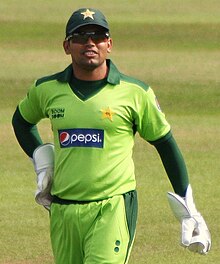
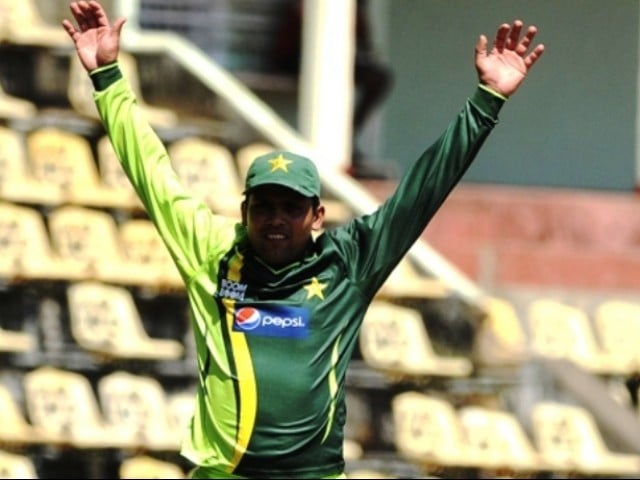
Kamran Akmal

Source(google.com.pk)
Kamran Akmal Biography
Kamran Akmal might fighting fit be the majority vigorous testimony of cricket’s distorted main concerned position Adam Gilchrist. A side at the present rummage around for a volatile batsman who can revolutionize a day, an innings, and a stage by means of the bat and so elongated while you can recognize right wicket keeping glove from left, the position is yours.
There has been diminutive distrust concerning Akmal’s batting. The cleanliness of his constrains and the potency of his wounding and dragging, for the most part on slower subcontinent exteriors, has all the time apprehended a strong magnetism. And when it comes mutually as it did one January morning in Karachi in opposition to India – one of the Test innings of that decade – he makes it in the side as a batsman unaccompanied.
Other than his glove work, which started quit auspiciously at what time he successfully finished the battle between Rashid Latif and Moin Khan in belatedly 2004, has got worse frighteningly and a small number of Pakistan matches are complete exclusive of a lumbering Akmal mistake.
It was not for all time hence, for that he was excellent at what time he started, quit presentable to make an impression Ian Healy. On the other hand uncontrollably cricket in all three systems have consent to methodological blunders move stealthily in and critics and specialists have extended pushed for the need for him to take a break.
To excellence spin, he is frequently as gone astray as the batsmen and Danish Kaneria, in excess of the years, has went through in meticulous. In a filament of fault-ridden performances, the one no one will stop thinking about will be the four dropped catches (and a failed to spot run-out) in the Sydney Test of 2009-10, which permitted Australia to run away with an extraordinary, shocking win. In opposition to this the memory of his Karachi hundred will for all time encounters, devoid of obvious winner ever to be expected to come into sight. The assignation with disagreement does his grounds no high-quality, with his negative response to agree with his relegation from the side in the consequences of a catastrophic Sydney Test in 2009, drawing out an inconsiderate fine and a punitive try-out from the PCB.
Kamran Akmal
Kamran Akmal
 Kamran Akmal
Kamran Akmal

Kamran Akmal

Kamran Akmal
Kamran Akmal
Kamran Akmal
 
Kamran Akmal
Kamran Akmal
Kamran Akmal

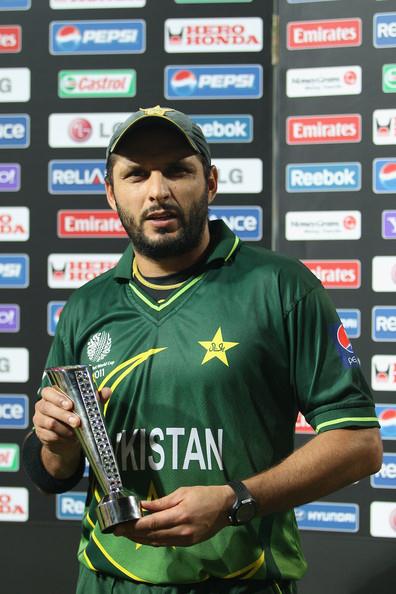
Shahid Khan Afridi

Source( google.com.pk)
Shahid Khan Afridi Biography
Nickname: Lala
D.O.B: March 1,1980,Khyber Agency,Karachi,Pakistan
Height: 5ft 11in (1.8M)
Family: Wife Nadiya Afridi, Daughter:Aqsa,Ansha,Ajwa
Batting Style: Right Hand Bat
Bowling Style: Right Arm Wrist Spin
Education: ..........College, University of Karachi
Interests: Golf, Swimming, Squash, Hunting

International Team: Pakistan
County Team: Hampshire
IPL Team: Deccan Chargers

Of Shahid Afridi it can safely be said that cricket never has and never will see another like him. To say he is an allrounder is to say Albert Einstein was a scientist; it tells a criminally bare story.
For a start, the slant of his all-round skills only became clear ten years into his career; he is a leg-spinning allrounder. Variety is his calling and as well as a traditional leg-break, he has two googlies, a conventional offie and a lethal faster one, though this is increasingly rare. All come with the threat of considerable, late drift. He fairly hustles through overs, which in limited-over formats is a weapon in itself and the package is dangerous.
In 2009 Afridi became one of the World’s most expensive cricketers in the IPL auction.

Sahibzada Mohammad Shahid Khan Afridi is a cricket player for the Pakistan National team. He exploded on to the cricket scene by scoring the fastest century in ODIs in his very first innings. He was initially selected as a bowler but after his big hitting in his 1st innings, he focused more on his batting. In recent years he has gone back to focusing on his bowling . His style of play is best suited to the shortest form of the game T20s.

Achievements:
Career Highlights of SHAHID AFRIDI :

(1) On 4 October 1996, playing his maiden international innings, Afridi hit the fastest One-Day century off 37 balls against Sri Lanka in Nairobi. His innings included 28 runs off one of Sanath Jayasuriya's overs, whose record he broke.

(2) Youngest player in history to make an ODI century at just 16 years and 217 days with his 37 ball ton against Sri Lanka. It included 11 sixes and 6 fours.

(3) Made a half-century from 26 balls and took 3 second-innings wickets in Pakistan's series- drawing Test victory against India in March 2005.

(4) Holds the joint record with Brian Lara for the third fastest ODI century off 45 balls in April 2005 against India. This actually was the first match that witnessed the Indian cricketer-turned-commentator Ravi Shastri make him the nickname Boom Boom Afridi.

(5) Equal highest aggregate sixes scored in the 50-over game, shared the legendary Sri Lankan batsman Sanath Jayasuriya, and he the most sixes per innings record.

(6) Scored four consecutive sixes off a Harbhajan Singh over in a Test match against India in January 2006, matching a feat that Kapil Dev achieved in 1990.

(7) Was the First player to score 12 runs off one ball, by hitting the roof of the Millennium Stadium. This took place in a game of Power Cricket.

(8) Holds four of the top eight fastest ODI half centuries, twice completed in 18 balls and twice in 20 balls. He has also scored a half century of just 21 balls.

(9) Made 32 runs off a Malinga Bandara over in an ODI game at Abu Dhabi in 2007. He struck four consecutive sixes and it was the 2nd most expensive over in ODI history.

(10) Afridi is only third player in ODI history to achieve the combination of 5000 runs and 200 wickets. The other players being Sri Lankan batsman Sanath Jayasuriya and South African Jacques Kallis.

(11) Bernie Geoffrion, a Canadian professional ice hockey player and coach was also nicknamed "Boom Boom" Geoffrion.
Shahid Khan Afridi 
Shahid Khan Afridi
Shahid Khan Afridi
Shahid Khan Afridi
Shahid Khan Afridi
Shahid Khan Afridi
Shahid Khan Afridi
Shahid Khan Afridi
Shahid Khan Afridi
Shahid Khan Afridi

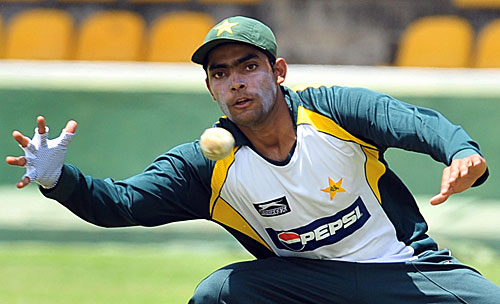
Umar Akmal

Source( google.com.pk)
Umar Akmal Biography
As explosive starts to one’s International careers go, few can rival Umar Akmal. He announced his entry with scores of 66 and 102* within his first 3 ODI innings (at Sri Lanka, 2009) in addition to a 129 and 75 on Test debut (at New Zealand, 2009). Those performances weren’t a surprise. At first class level, Akmal was renowned for his big scores amassed in quick time. 7 years prior to his debut, Umar’s elder brother Kamran had already gotten his taste of international cricket. By 2010, the siblings featured regularly, in tandem for Pakistan.
As a fearless, middle-order batsman, throughout Pakistan’s disappointing spree of series losses against Sri Lanka in 2009 and later at Australia in early 2010, Umar Akmal’s ascendance was one of their few positives. But as the series in Australia progressed, complacency began to creep into Akmal’s Test form, which started to dip. In ODIs though, a hundred and five fifties by his 18th outing maintained a steady average. It was enough to justify an inclusion in Pakistan’s 2010 T20 World Cup squad. He finished the tournament as Pakistan’s 3rd highest-run getter towards their semi-final run.
While still protected as a batsman, featuring at 3-down, in a Pakistan side that lacks specialist batsmen with the temperament for all forms of the game, Umar Akmal is their most proven rookie to fill the void for the years to come.
Umar Akmal
Umar Akmal
Umar Akmal
Umar Akmal
Umar Akmal
Umar Akmal
Umar Akmal
Umar Akmal
Umar Akmal
Umar Akmal
Umar Akmal

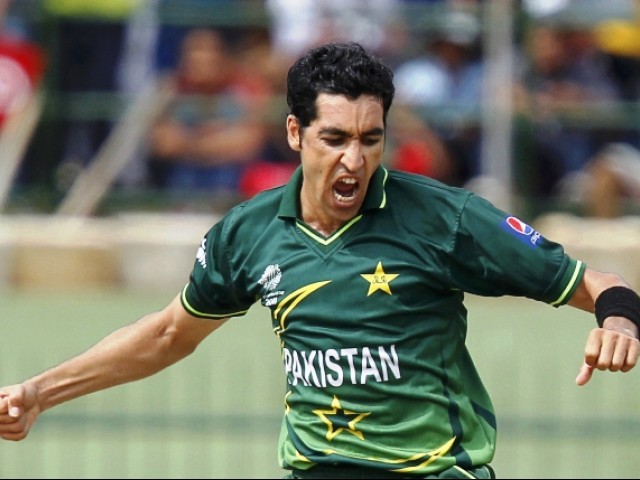
Umar GUL

Source(google.com.pk)
Umar GUL Biography
Full name Umar Gul


Born April 14, 1984, Peshawar, North-Western Frontier Province


Major teams Pakistan, Gloucestershire, Habib Bank Limited, Kolkata Knight Riders, North West Frontier Province, North West Frontier Province Panthers, Pakistan A, Pakistan International Airlines, Peshawar, Peshawar Panthers, Western Australia


Playing role Bowler


Batting style Right-hand bat


Bowling style Right-arm fast-medium


The least-hyped but most successful and assured Pakistan pace product of the last few years, Umar Gul is the latest in Pakistan's assembly-line of pace-bowling talent. He had played just nine first-class matches when called up for national duty in the wake of Pakistan's poor 2003 World Cup. On the flat tracks of Sharjah, Gul performed admirably, maintaining excellent discipline and getting appreciable outswing with the new ball.


He isn't express but bowls a very quick heavy ball and his exceptional control and ability to extract seam movement marks him out. Further, his height enables him to extract bounce on most surfaces and from his natural back of a length, it is a useful trait. His first big moment in his career came in the Lahore Test against India in 2003-04. Unfazed by a daunting batting line-up, Gul tore through the Indian top order, moving the ball both ways off the seam at a sharp pace. His 5 for 31 in the first innings gave Pakistan the early initiative which they drove home to win the Test.


Unfortunately, that was his last cricket of any kind for over a year as he discovered three stress fractures in his back immediately after the Test. The injury would have ended many an international career, but Gul returned, fitter and sharper than before in late 2005. He returned in a Pakistan shirt against India in the ODI series at home in February 2006 and in Sri Lanka showed further signs of rehabilitation by lasting both Tests but it was really the second half of 2006, where he fully came of age. Leading the attack against England and then the West Indies as Pakistan's main bowlers suffered injuries, Gul stood tall, finishing Pakistan's best bowler.


Since then, as Mohammad Asif and Shoaib Akhtar have floundered, Gul has become Pakistan's spearhead and one of the best fast bowlers in the world. He is smart enough and good enough to succeed in all three formats and 2009 proved it: he put together a patch of wicket-taking in ODIs, on dead pitches in Tests (including a career-best six-wicket haul against Sri Lanka) and established himself as the world's best Twenty20 bowler, coming on after the initial overs and firing in yorkers on demand.


He had hinted at that by being leading wicket-taker in the 2007 World Twenty20; over the next two years he impressed wherever he went, in the IPL for the Kolkatta Knight Riders and in Australia's domestic Twenty20 tournament. Confirmation came on the grandest stage: having poleaxed Australia in a T20I in Dubai with 4-8, he was the best bowler and leading wicket-taker as Pakistan won the second World Twenty20 in England. The highlight was 5-6 against New Zealand, the highest quality exhibition of yorker bowling. He is not a one-format pony, however, and will remain a crucial cog in Pakistan's attack across all formats.
Umar GUL
Umar GUL
Umar GUL
Umar GUL
Umar GUL
Umar GUL
Umar GUL
Umar GUL
Umar GUL
Umar GUL
 
Umar Gul